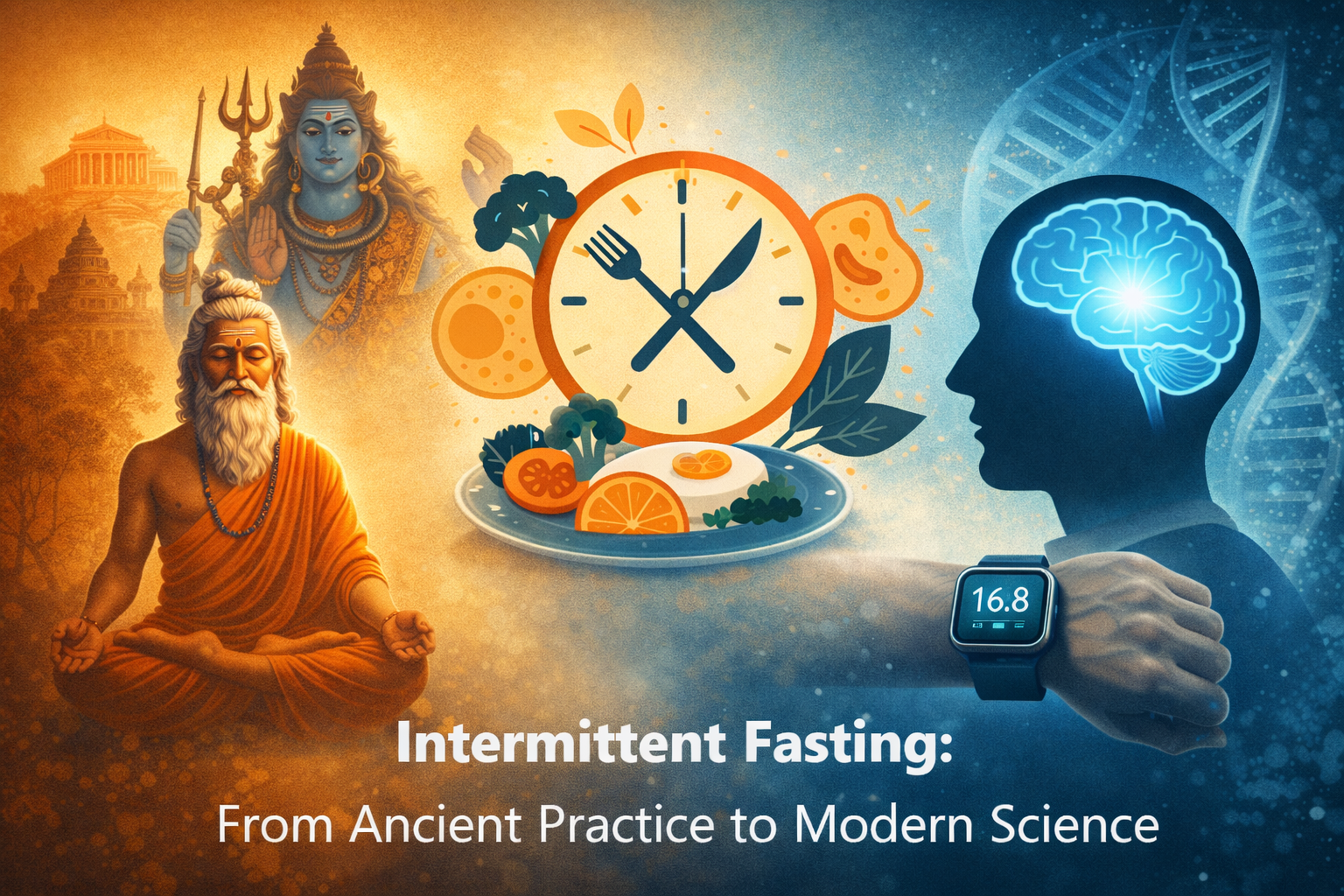
Intermittent fasting is often perceived as a modern wellness trend, but in reality, it is a practice with deep historical roots. From ancient civilizations to cutting-edge scientific research, humans have long understood—intuitively and now scientifically—that periodic abstinence from food can offer profound health benefits.
Intermittent Fasting in Ancient History
🏛 Ancient Greece
Hippocrates (c. 460–370 BCE), widely regarded as the father of medicine, frequently recommended temporary fasting as a therapeutic tool. Philosophers such as Plato and Socrates also practiced fasting to enhance mental clarity and focus.
“Eating when you are not hungry is harmful to the body.”
— attributed to Hippocrates
🕌 Religious and Spiritual Traditions
Fasting has been a cornerstone of spiritual and physical discipline across cultures:
- Christianity – fasting as purification of body and soul
- Islam – Ramadan involves daily fasting from sunrise to sunset
- Buddhism & Hinduism – fasting for mindfulness, discipline, and balance
These traditions span thousands of years and are closely linked not only to spirituality but also to health.
🏹 Hunter-Gatherer Lifestyle
Before agriculture, humans had no constant access to food. Our metabolism evolved to function optimally under conditions of alternating feeding and fasting, not continuous calorie intake. Intermittent fasting aligns closely with our biological heritage.
The Rediscovery of Fasting in Modern Science
In the 20th and 21st centuries, intermittent fasting regained scientific attention—this time supported by biochemistry, genetics, and clinical research.
Scientifically Supported Benefits of Intermittent Fasting
🔥 Fat Loss and Metabolic Health
During fasting, insulin levels drop, allowing the body to access stored fat more efficiently and improve metabolic flexibility.
🔬 Autophagy – Cellular Renewal
In 2016, Japanese scientist Yoshinori Ohsumi received the Nobel Prize for discovering the mechanisms of autophagy, a cellular recycling process strongly activated during fasting. Autophagy helps remove damaged cellular components and supports long-term cellular health.
🧠 Improved Mental Clarity
Fasting increases the production of ketones, an efficient energy source for the brain. Many people report:
- sharper focus
- clearer thinking
- stable, sustained energy
❤️ Heart Health
Research indicates improvements in:
- blood pressure
- LDL cholesterol levels
- inflammatory markers
These factors contribute to a reduced risk of cardiovascular disease.
⏳ Potential Longevity Benefits
Animal studies and human observational research suggest that intermittent fasting may help reduce the risk of age-related chronic diseases and support healthy aging.
Intermittent Fasting Today
Popular modern fasting protocols include:
- 16:8 – 16 hours fasting, 8 hours eating
- 18:6
- OMAD (One Meal a Day)
- 24-hour fasts once or twice per week
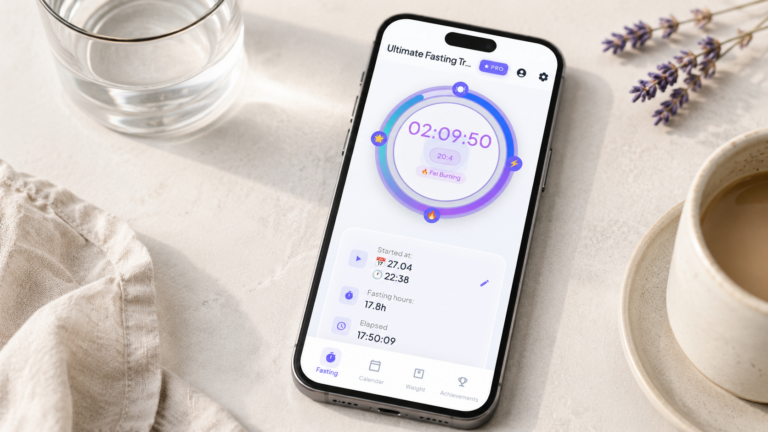
With the help of modern apps and AI-powered tools, fasting today can be personalized, safe, and sustainable, fitting seamlessly into everyday life.
Conclusion
Intermittent fasting is not a passing trend—it is a time-tested human practice now strongly supported by science. From ancient philosophers to Nobel Prize–winning research, the message remains consistent:
Sometimes, the best thing we can do for our body is to give it a break.
Sources & References
- Mattson, M. P., et al.
Effects of Intermittent Fasting on Health, Aging, and Disease.
New England Journal of Medicine, 2019
https://www.nejm.org/doi/full/10.1056/NEJMra1905136 - Ohsumi, Y.
Autophagy in health and disease.
Nobel Prize Lecture, 2016
https://www.nobelprize.org/prizes/medicine/2016/ohsumi/lecture/ - Anton, S. D., et al.
Flipping the Metabolic Switch: Understanding and Applying the Health Benefits of Fasting.
Obesity, 2018
https://pubmed.ncbi.nlm.nih.gov/29020477/ - Longo, V. D., Panda, S.
Fasting, Circadian Rhythms, and Time-Restricted Feeding.
Cell Metabolism, 2016
https://www.cell.com/cell-metabolism/fulltext/S1550-4131(16)30251-4 - Harvard T.H. Chan School of Public Health
Intermittent Fasting
https://www.hsph.harvard.edu/nutritionsource/healthy-weight/diet-reviews/intermittent-fasting/